
Medical Residency Program in Armenia
Medical Residency in Armenia
National Institute of Health – Armenia
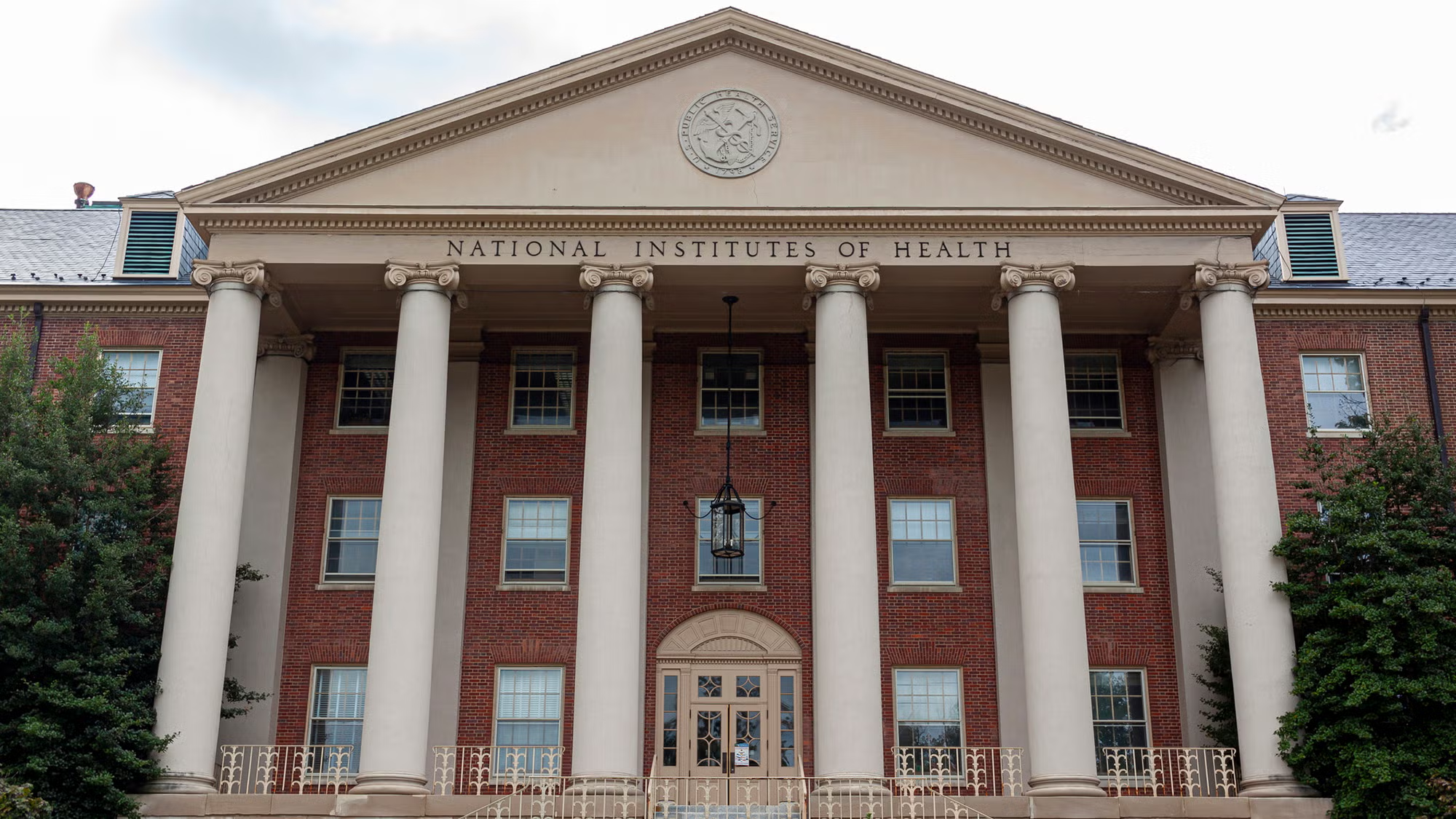
The National Institute of Health under the Ministry of Health of Armenia is one of the leading postgraduate medical education institutions offering internationally recognized Medical Residency (PG) programs for MBBS graduates. The institute provides advanced clinical training with modern medical infrastructure, experienced faculty, and hands-on hospital exposure. The residency programs are designed to develop strong diagnostic, surgical, and patient management skills according to European medical standards.Armenia has become an emerging destination for PG medical education due to its affordable tuition fees, quality healthcare system, and globally acceptable medical training structure.
Available Specializations
Department of Eye Diseases (Ophthalmology)
-
Department of Hematology and Transfusion Medicine
-
Department of Anesthesiology and Intensive Care
-
Department of Head and Neck Surgery
-
Department of Forensic Medicine
-
Department of Family Medicine
-
Department of Microbiology
-
Department of Public Health
-
Department of Psychiatry
-
Department of Pediatrics
-
Department of Internal Medicine
-
Department of Neurology, Neurosurgery & Rehabilitation
-
Department of Plastic & Reconstructive Surgery
-
Department of Dentistry
-
Department of Cardiology
-
Department of Cardiovascular Surgery
-
Department of General & Modern Surgical Technologies
-
Department of Traumatology & Orthopedics
-
Department of Thoracic Surgery
-
Department of Oncology
Course Duration
2 to 4 Years (Depending on Specialization)
Eligibility Criteria
-
MBBS Degree from a recognized university
-
Completed Internship
-
Valid Medical Registration
-
Passport
Medium of Instruction
English (For International Students)
Why Choose Residency in Armenia?
✔ Affordable tuition fees compared to other European countries
✔ European-standard medical training
✔ Advanced hospital exposure
✔ International patient handling experience
✔ Safe and student-friendly environment
✔ Growing recognition among international medical boards
Career Opportunities
Apply for medical licensing exams in their home country
-
Practice in hospitals and private clinics
-
Pursue further fellowships
-
Work in government or private healthcare sectors
Medical Residency in Armenia is becoming one of the most preferred postgraduate options for MBBS graduates who want quality education at an affordable cost. Armenia offers a strong European-standard medical system, modern hospitals, and structured clinical training that prepares doctors for global medical practice. With advanced infrastructure, experienced faculty members, and real-time patient exposure, Armenia provides the ideal environment for young doctors to specialize in their chosen field.
The residency programs are mainly conducted through the National Institute of Health, operating under the Ministry of Health of Armenia. The institute is well known for postgraduate medical training and provides specialization opportunities in both medical and surgical branches. The curriculum focuses on practical skills, research development, clinical diagnosis, and advanced treatment procedures. Students are trained in affiliated government and private hospitals where they gain hands-on experience under expert supervision.
One of the biggest advantages of choosing Medical Residency in Armenia is affordability. Compared to many European and Western countries, tuition fees and living expenses are significantly lower while maintaining high academic standards. This makes Armenia an excellent choice for international students, especially from countries like India, Asia, and Africa. The cost-effectiveness combined with quality education ensures excellent return on investment for aspiring specialists.
The duration of residency programs generally ranges from 2 to 4 years depending on the specialization. Clinical branches such as Cardiology, Internal Medicine, Pediatrics, Psychiatry, and Neurology typically follow structured academic and hospital-based training. Surgical branches such as Cardiovascular Surgery, Plastic Surgery, Orthopedics, and Neurosurgery include intensive practical exposure in operation theatres and advanced surgical units. During Medical Residency in Armenia, students actively participate in case discussions, emergency duties, ward rounds, and research projects, which strengthens their clinical confidence and decision-making abilities.
Another major benefit is the European-style medical education framework. Armenia follows modern treatment protocols and diagnostic standards aligned with international medical systems. Hospitals are equipped with updated technology and medical equipment, allowing residents to gain practical exposure in real healthcare environments. This ensures that after completing their specialization, graduates are well prepared for licensing examinations or further fellowships in different countries.
Eligibility for admission is straightforward. Candidates must have completed MBBS (or equivalent medical degree) from a recognized university along with internship completion. A valid medical registration, passport, academic transcripts, and other required documents are necessary for application. The admission process is simple and transparent, making Medical Residency in Armenia accessible for deserving candidates without complicated entrance procedures.
Armenia also offers a safe, student-friendly environment. The country is known for its peaceful atmosphere, welcoming culture, and affordable lifestyle. International students can comfortably manage accommodation, food, and transportation expenses. The capital city Yerevan is modern, well-connected, and home to major teaching hospitals and academic centers. Students benefit from multicultural exposure while focusing on their academic and professional development.
Language is another important factor. Many residency programs are available in English for international students, which removes language barriers and makes learning easier. Faculty members are experienced specialists who guide residents through every stage of clinical practice. Mentorship plays a crucial role in shaping competent doctors, and structured supervision ensures high-quality medical training.
The list of available specializations is wide and diverse. Students can choose from Eye Diseases (Ophthalmology), Hematology and Transfusion Medicine, Anesthesiology and Intensive Care, Head and Neck Surgery, Forensic Medicine, Family Medicine, Microbiology, Public Health, Psychiatry, Pediatrics, Internal Medicine, Neurology, Neurosurgery, Plastic and Reconstructive Surgery, Dentistry, Cardiology, Cardiovascular Surgery, Surgical Diseases, Traumatology and Orthopedics, Thoracic Surgery, and Oncology. This wide range of departments allows candidates to pursue their preferred field without compromise.
Career opportunities after completing Medical Residency in Armenia are promising. Graduates can apply for screening or licensing exams in their home country according to local medical council regulations. Many doctors pursue further fellowships or super-specialization programs. Others choose to practice in hospitals, open private clinics, or work in academic and research sectors. The practical exposure gained during training enhances employability and professional credibility.
In addition to academic learning, residents develop essential soft skills such as patient communication, teamwork, leadership, and ethical medical practice. These skills are critical in modern healthcare systems. The structured residency environment ensures residents are not only clinically competent but also professionally responsible and confident.
Choosing Medical Residency in Armenia is a strategic decision for MBBS graduates who want global exposure without extremely high financial burden. The combination of affordable fees, European-standard training, wide specialization options, and hands-on clinical experience makes Armenia an emerging destination for postgraduate medical education. Students benefit from a balanced academic system that integrates theory, research, and real-time hospital training.
For aspiring specialists looking for quality postgraduate education abroad, Armenia provides a reliable and practical pathway. With growing international recognition and structured medical training, the country continues to attract medical graduates from around the world. Completing Medical Residency in Armenia opens doors to international medical careers and professional growth in a competitive healthcare industry.
Medical Residency in Armenia is becoming one of the most preferred postgraduate options for MBBS graduates who want quality education at an affordable cost. Armenia offers a strong European-standard medical system, modern hospitals, and structured clinical training that prepares doctors for global medical practice. With advanced infrastructure, experienced faculty members, and real-time patient exposure, Armenia provides the ideal environment for young doctors to specialize in their chosen field.
The residency programs are mainly conducted through the National Institute of Health, operating under the Ministry of Health of Armenia. The institute is well known for postgraduate medical training and provides specialization opportunities in both medical and surgical branches. The curriculum focuses on practical skills, research development, clinical diagnosis, and advanced treatment procedures. Students are trained in affiliated government and private hospitals where they gain hands-on experience under expert supervision.
One of the biggest advantages of choosing Medical Residency in Armenia is affordability. Compared to many European and Western countries, tuition fees and living expenses are significantly lower while maintaining high academic standards. This makes Armenia an excellent choice for international students, especially from countries like India, Asia, and Africa. The cost-effectiveness combined with quality education ensures excellent return on investment for aspiring specialists.
The duration of residency programs generally ranges from 2 to 4 years depending on the specialization. Clinical branches such as Cardiology, Internal Medicine, Pediatrics, Psychiatry, and Neurology typically follow structured academic and hospital-based training. Surgical branches such as Cardiovascular Surgery, Plastic Surgery, Orthopedics, and Neurosurgery include intensive practical exposure in operation theatres and advanced surgical units. During Medical Residency in Armenia, students actively participate in case discussions, emergency duties, ward rounds, and research projects, which strengthens their clinical confidence and decision-making abilities.
Medical Residency in Armenia is becoming one of the most preferred postgraduate options for MBBS graduates who want quality education at an affordable cost. Armenia offers a strong European-standard medical system, modern hospitals, and structured clinical training that prepares doctors for global medical practice. With advanced infrastructure, experienced faculty members, and real-time patient exposure, Armenia provides the ideal environment for young doctors to specialize in their chosen field.
The residency programs are mainly conducted through the National Institute of Health, operating under the Ministry of Health of Armenia. The institute is well known for postgraduate medical training and provides specialization opportunities in both medical and surgical branches. The curriculum focuses on practical skills, research development, clinical diagnosis, and advanced treatment procedures. Students are trained in affiliated government and private hospitals where they gain hands-on experience under expert supervision.
One of the biggest advantages of choosing Medical Residency in Armenia is affordability. Compared to many European and Western countries, tuition fees and living expenses are significantly lower while maintaining high academic standards. This makes Armenia an excellent choice for international students, especially from countries like India, Asia, and Africa. The cost-effectiveness combined with quality education ensures excellent return on investment for aspiring specialists.
The duration of residency programs generally ranges from 2 to 4 years depending on the specialization. Clinical branches such as Cardiology, Internal Medicine, Pediatrics, Psychiatry, and Neurology typically follow structured academic and hospital-based training. Surgical branches such as Cardiovascular Surgery, Plastic Surgery, Orthopedics, and Neurosurgery include intensive practical exposure in operation theatres and advanced surgical units. During Medical Residency in Armenia, students actively participate in case discussions, emergency duties, ward rounds, and research projects, which strengthens their clinical confidence and decision-making abilities.
Medical Residency in Armenia is becoming one of the most preferred postgraduate options for MBBS graduates who want quality education at an affordable cost. Armenia offers a strong European-standard medical system, modern hospitals, and structured clinical training that prepares doctors for global medical practice. With advanced infrastructure, experienced faculty members, and real-time patient exposure, Armenia provides the ideal environment for young doctors to specialize in their chosen field.
The residency programs are mainly conducted through the National Institute of Health, operating under the Ministry of Health of Armenia. The institute is well known for postgraduate medical training and provides specialization opportunities in both medical and surgical branches. The curriculum focuses on practical skills, research development, clinical diagnosis, and advanced treatment procedures. Students are trained in affiliated government and private hospitals where they gain hands-on experience under expert supervision.
One of the biggest advantages of choosing Medical Residency in Armenia is affordability. Compared to many European and Western countries, tuition fees and living expenses are significantly lower while maintaining high academic standards. This makes Armenia an excellent choice for international students, especially from countries like India, Asia, and Africa. The cost-effectiveness combined with quality education ensures excellent return on investment for aspiring specialists.
The duration of residency programs generally ranges from 2 to 4 years depending on the specialization. Clinical branches such as Cardiology, Internal Medicine, Pediatrics, Psychiatry, and Neurology typically follow structured academic and hospital-based training. Surgical branches such as Cardiovascular Surgery, Plastic Surgery, Orthopedics, and Neurosurgery include intensive practical exposure in operation theatres and advanced surgical units. During Medical Residency in Armenia, students actively participate in case discussions, emergency duties, ward rounds, and research projects, which strengthens their clinical confidence and decision-making abilities.
The duration of residency programs generally ranges from 2 to 4 years depending on the specialization. Clinical branches such as Cardiology, Internal Medicine, Pediatrics, Psychiatry, and Neurology typically follow structured academic and hospital-based training. Surgical branches such as Cardiovascular Surgery, Plastic Surgery, Orthopedics, and Neurosurgery include intensive practical exposure in operation theatres and advanced surgical units. During Medical Residency in Armenia, students actively participate in case discussions, emergency duties, ward rounds, and research projects, which strengthens their clinical confidence and decision-making abilities.
Medical Residency in Armenia is becoming one of the most preferred postgraduate options for MBBS graduates who want quality education at an affordable cost. Armenia offers a strong European-standard medical system, modern hospitals, and structured clinical training that prepares doctors for global medical practice. With advanced infrastructure, experienced faculty members, and real-time patient exposure, Armenia provides the ideal environment for young doctors to specialize in their chosen field.
The residency programs are mainly conducted through the National Institute of Health, operating under the Ministry of Health of Armenia. The institute is well known for postgraduate medical training and provides specialization opportunities in both medical and surgical branches. The curriculum focuses on practical skills, research development, clinical diagnosis, and advanced treatment procedures. Students are trained in affiliated government and private hospitals where they gain hands-on experience under expert supervision.
One of the biggest advantages of choosing Medical Residency in Armenia is affordability. Compared to many European and Western countries, tuition fees and living expenses are significantly lower while maintaining high academic standards. This makes Armenia an excellent choice for international students, especially from countries like India, Asia, and Africa. The cost-effectiveness combined with quality education ensures excellent return on investment for aspiring specialists.
The duration of residency programs generally ranges from 2 to 4 years depending on the specialization. Clinical branches such as Cardiology, Internal Medicine, Pediatrics, Psychiatry, and Neurology typically follow structured academic and hospital-based training. Surgical branches such as Cardiovascular Surgery, Plastic Surgery, Orthopedics, and Neurosurgery include intensive practical exposure in operation theatres and advanced surgical units. During Medical Residency in Armenia, students actively participate in case discussions, emergency duties, ward rounds, and research projects, which strengthens their clinical confidence and decision-making abilities.
The duration of residency programs generally ranges from 2 to 4 years depending on the specialization. Clinical branches such as Cardiology, Internal Medicine, Pediatrics, Psychiatry, and Neurology typically follow structured academic and hospital-based training. Surgical branches such as Cardiovascular Surgery, Plastic Surgery, Orthopedics, and Neurosurgery include intensive practical exposure in operation theatres and advanced surgical units. During Medical Residency in Armenia, students actively participate in case discussions, emergency duties, ward rounds, and research projects, which strengthens their clinical confidence and decision-making abilities.
Medical Residency in Armenia is becoming one of the most preferred postgraduate options for MBBS graduates who want quality education at an affordable cost. Armenia offers a strong European-standard medical system, modern hospitals, and structured clinical training that prepares doctors for global medical practice. With advanced infrastructure, experienced faculty members, and real-time patient exposure, Armenia provides the ideal environment for young doctors to specialize in their chosen field.
The residency programs are mainly conducted through the National Institute of Health, operating under the Ministry of Health of Armenia. The institute is well known for postgraduate medical training and provides specialization opportunities in both medical and surgical branches. The curriculum focuses on practical skills, research development, clinical diagnosis, and advanced treatment procedures. Students are trained in affiliated government and private hospitals where they gain hands-on experience under expert supervision.
One of the biggest advantages of choosing Medical Residency in Armenia is affordability. Compared to many European and Western countries, tuition fees and living expenses are significantly lower while maintaining high academic standards. This makes Armenia an excellent choice for international students, especially from countries like India, Asia, and Africa. The cost-effectiveness combined with quality education ensures excellent return on investment for aspiring specialists.
The duration of residency programs generally ranges from 2 to 4 years depending on the specialization. Clinical branches such as Cardiology, Internal Medicine, Pediatrics, Psychiatry, and Neurology typically follow structured academic and hospital-based training. Surgical branches such as Cardiovascular Surgery, Plastic Surgery, Orthopedics, and Neurosurgery include intensive practical exposure in operation theatres and advanced surgical units. During Medical Residency in Armenia, students actively participate in case discussions, emergency duties, ward rounds, and research projects, which strengthens their clinical confidence and decision-making abilities.